Dotaku Bronze Bells and Bronze Mirrors of Awaji Island
- Home
- Dotaku Bronze Bells and Bronze Mirrors of Awaji Island
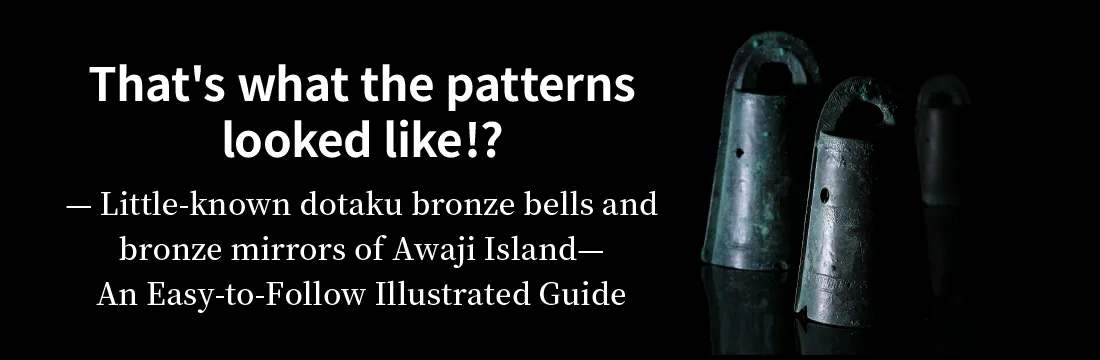
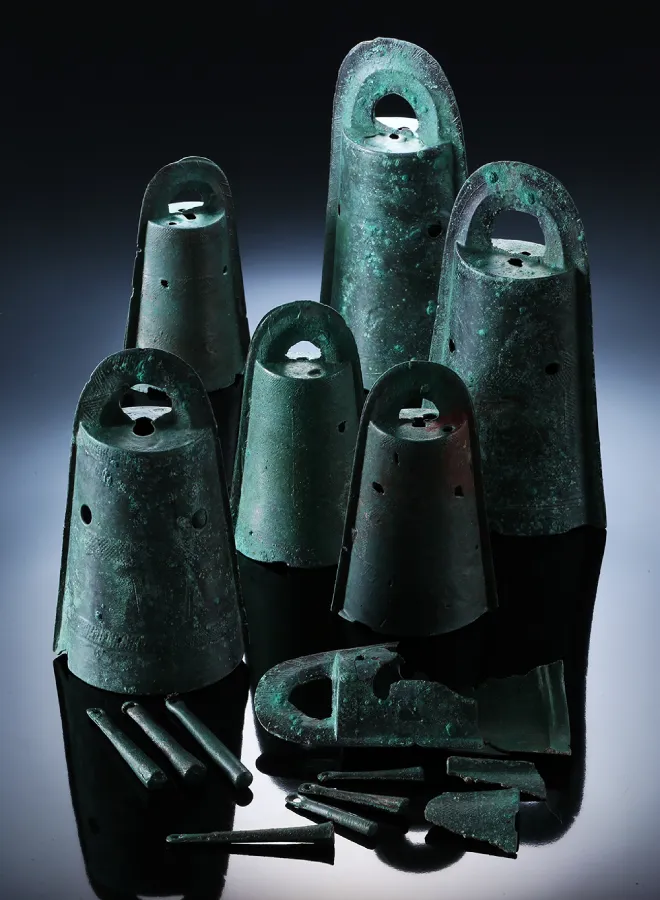
Matsuho Dotaku
These bronze bells were discovered with their bronze clappers (zetsu)—the rods that produced sound when the bells were suspended and rung—still inside.
It is the first time in Japan that traces left by cords used to suspend dotaku have been identified. No dotaku discovered so far were found with clues that made it possible to determine their precise age.
They were buried approximately 2,100 to 2,300 years ago, during the early Yayoi period.
Dotaku
It is believed that copper bells, originally used for livestock in China, reached Japan via the Korean Peninsula. These copper bells were about 10 cm tall, but once they began to be cast in Japan, they took on a unique form and grew larger with decorative patterns added. Initially, dotaku were designed to “ring” because of their shape; however, as they evolved, they became thinner and larger, transforming into objects intended for “visual appreciation.” On Awaji Island, only “dotaku for ringing” have been found.
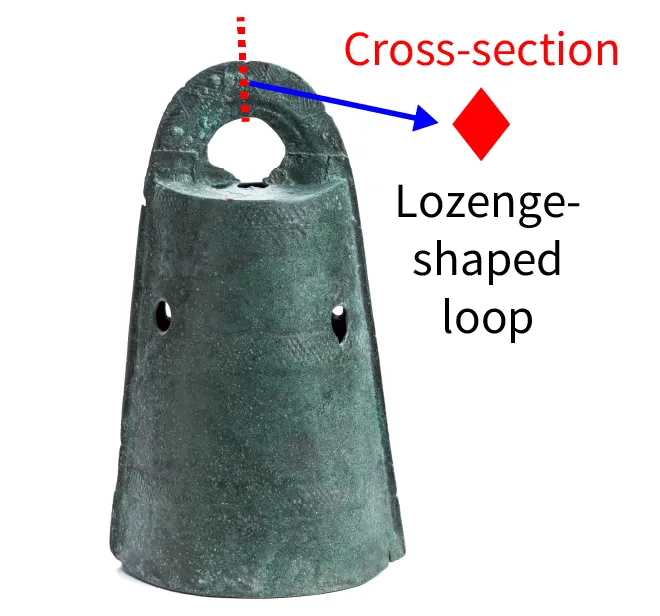
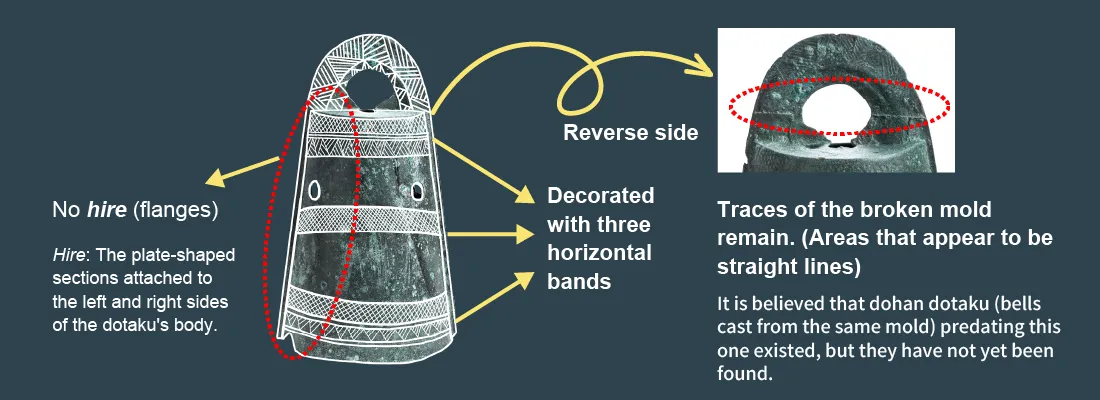
Matsuho No. 1 Dotaku
This is a dotaku of the oldest known type, the ryokanchu style (only 12 examples, including the Matsuho Dotaku, have been found in Japan)
Only older types of dotaku have been discovered on Awaji Island, indicating that local people were among the earliest to use them
Ryokanchu (Lit. Lozenge-shaped Loop Handle) style dotaku
The handle has a lozenge-shaped cross-section. Because it forms a loop—or, more accurately, an inverted U-shape—this specific type is named “ryokanchu” (lozenge-shaped loop handle).
Design Features
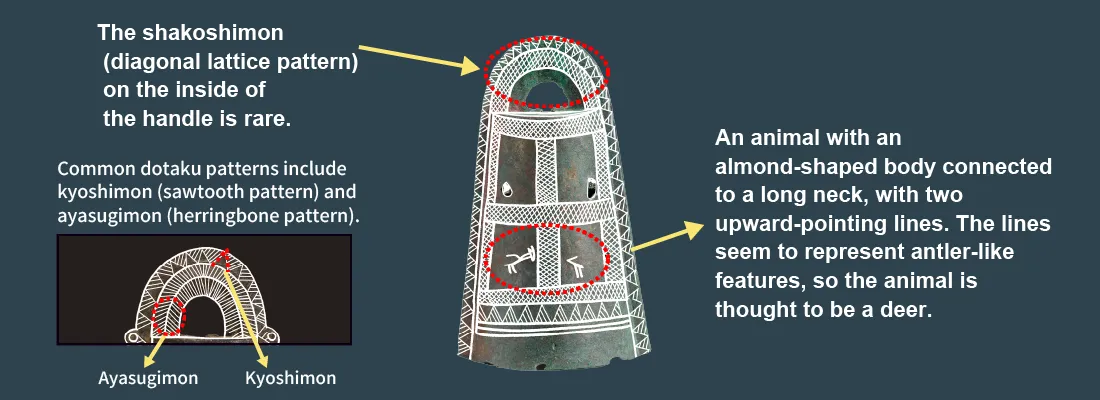
Matsuho No. 4 Dotaku
A dohan dotaku cast in the same mold as the Nikkoji Dotaku (Minamiawaji City: National Important Cultural Property); they are also known as brother dotaku.
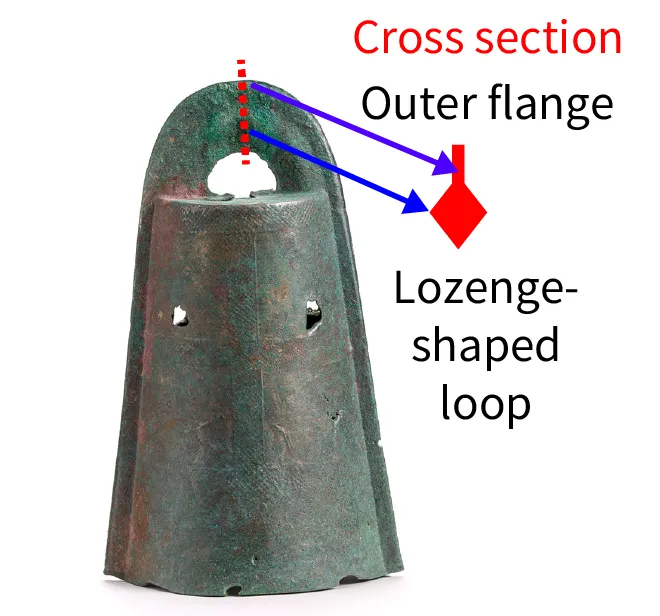
Gaientsukichu dotaku, the second oldest type after the ryokanchu dotaku.
Gaientsukichu (Lit. Handle with Outer Flange) type dotaku
This type is distinguished by a flange (thin plate) attached to the outer side of the lozenge-shaped loop. Because the outer edge is adorned with this flange, this specific type is named “gaientsukichu” (handle with outer flange).
Design Features
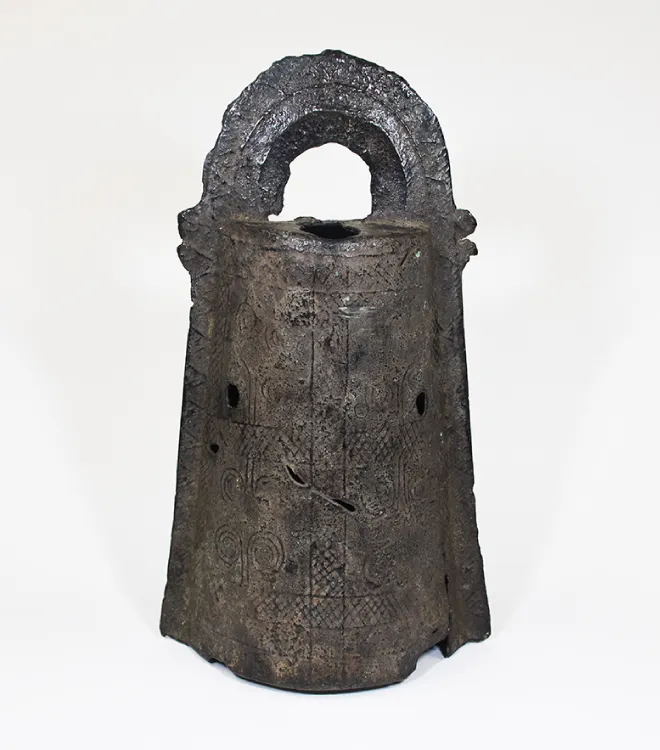
Keino Dotaku
This dotaku may be one excavated during the Edo period (1603-1868).
Like Matsuho No. 4 Dotaku, it is a gaientsukichu dotaku.
The warabitemon pattern, resembling growing bracken (warabi), is rarely seen on dotaku.
National Important Cultural Property
Design Features

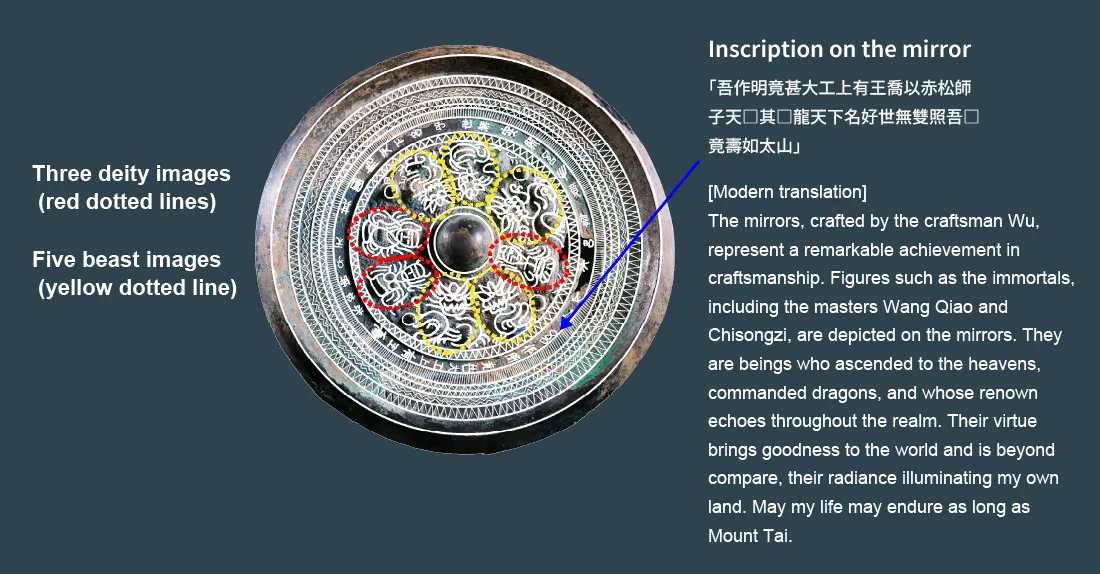
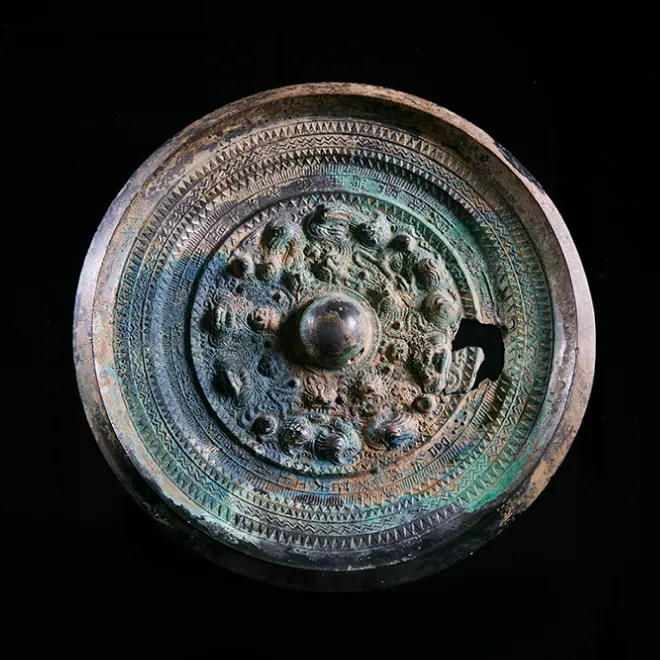
Koyadani Kofun Artifact - Sankakubuchi Sanshingojukyo
The only Sankakubuchi Shinjukyo mirror ever discovered on Awaji Island
A dohankyo, a mirror cast from the same mold as those found at Kurozuka Kofun (Nara Prefecture), Tsubai Otsukayama Kofun (Kyoto Prefecture), Kotobayama Kofun (Shiga Prefecture), and Otsuka Kofun (Shizuoka Prefecture).
Sankakubuchi Shinjukyo
A bronze mirror featuring patterns of deities and mythical beasts, with a triangular cross-sectioned rim, is called “Sankakubuchi Shinjukyo” (Triangular-Rimmed Mirror with Deities and Beasts). The bronze mirror, unearthed at the Koyadani Kofun, features a design of three deities and five beasts; thus, it is more accurately called the “Sankakubuchi Sanshin Goju Mirror.”
Because mirrors of this kind have been excavated from the tombs of powerful regional clan chieftains, they are believed to have served as symbols of a local leader’s authority.
Design Features