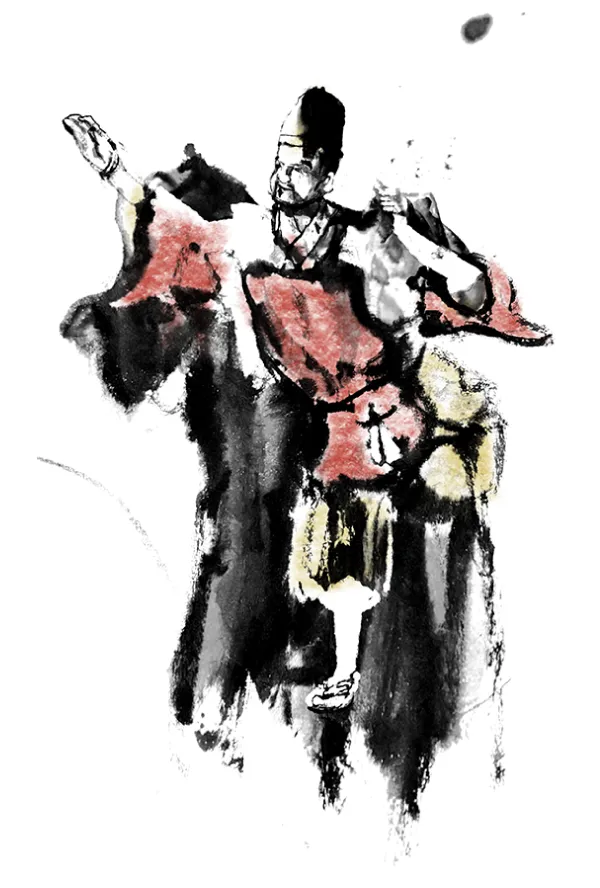
Kuniumi Story
- Home
- Kuniumi Story

The Beginnings of Japan—The Myth of Japan's Creation—
Kuniumi Story
The Kojiki, the oldest historical record of Japan, tells how the Japanese Islands were born.
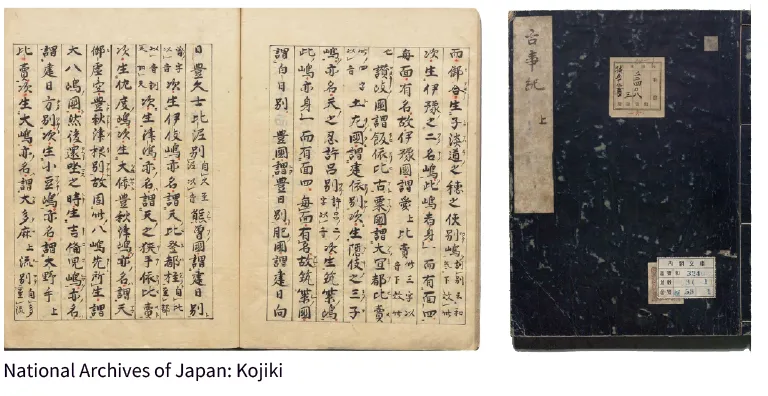
Before heaven and earth were separated, the world was in a floating, chaotic state.
Over time, heaven and earth began to take shape, and three deities—the origin of all things—came into existence in Takamanohara*1 (the Plain of High Heaven).
Later, more deities were born, and finally two deities, Izanagi-no-Mikoto and Izanami-no-Mikoto, appeared. The deities of Takamanohara commanded these two to descend to earth to create and solidify the land, and they bestowed upon them the beautiful, jewel-encrusted Ame no Nuboko (Heavenly Spear).
*1 Takamanohara: The world of the heavenly deities
Onokoro Island
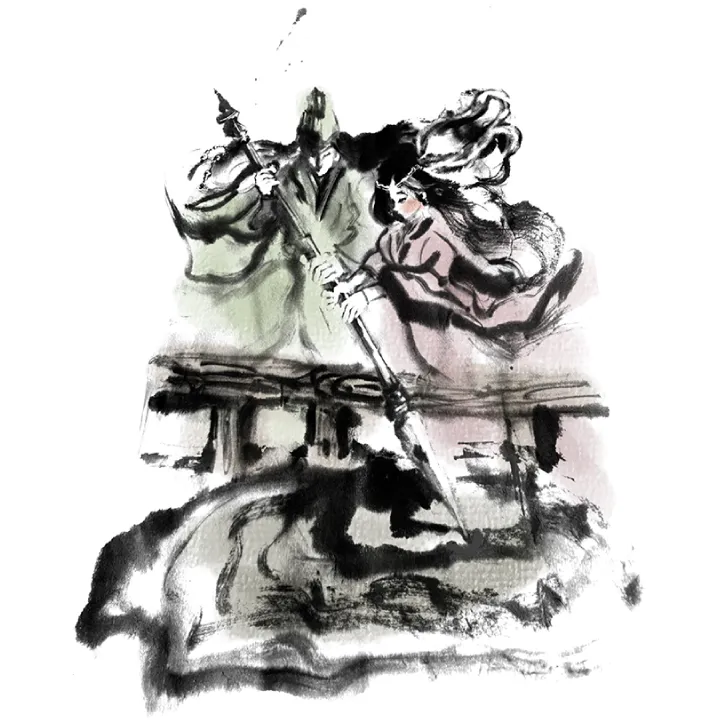
Izanagi-no-Mikoto and Izanami-no-Mikoto stood on the Ame no Ukihashi (the Floating Bridge of Heaven) connecting heaven and earth, churning the formless sea with the sound of “koworo, koworo.”
As they lifted the spear, salty drops fell from its tip, one after another, piling up to form an island.
This became “Onokoro Island,” where the two deities married.
The Birth of Japan
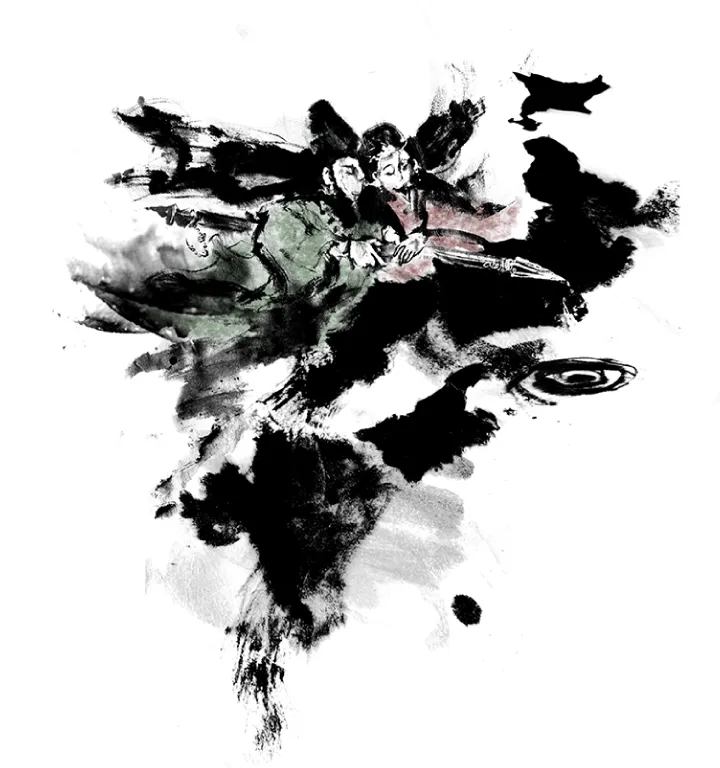
After their marriage, the two deities went on to create a series of islands.
First came Awaji, followed by Shikoku, Oki, Kyushu, Iki, Tsushima, Sado, and finally Honshu.
This marked the birth of Oyashima no Kuni (The Land of Eight Great Islands), namely, Japan.
Yomi no Kuni
(The Underworld)
After creating the islands, the two deities had many children; however, when Izanami-no-Mikoto gave birth to the fire god, Hinokagutsuchi, she was severely burned and died.
Izanagi-no-Mikoto decided to bring her back and headed to Yomi no Kuni, the afterlife.
Izanami-no-Mikoto spoke through the rock door, “I will consult the deities of Yomi no Kuni to see if I may return to my original world. In the meantime, please never look at me,” and then she left.
However, Izanagi-no-Mikoto, unable to wait any longer, broke his promise and peeked at her.
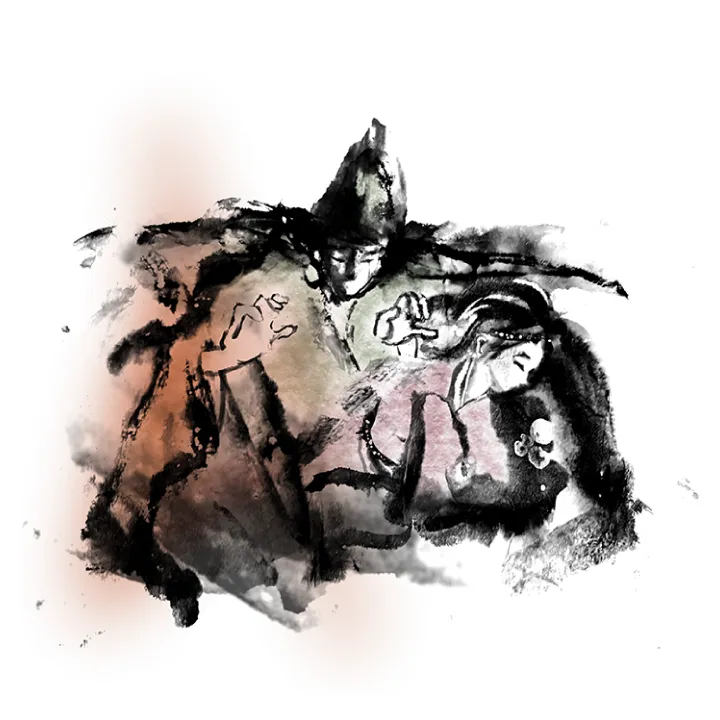
What he saw was the terrifying figure of Izanami-no-Mikoto, completely transformed.
Frozen in fear, Izanagi-no-Mikoto fled in spite of himself.
Enraged, Izanami-no-Mikoto ordered the hags, the thunder gods, and an army of warriors in the underworld to pursue him.
After barely shaking off his pursuers, Izanagi-no-Mikoto reached the boundary of Yomi no Kuni.
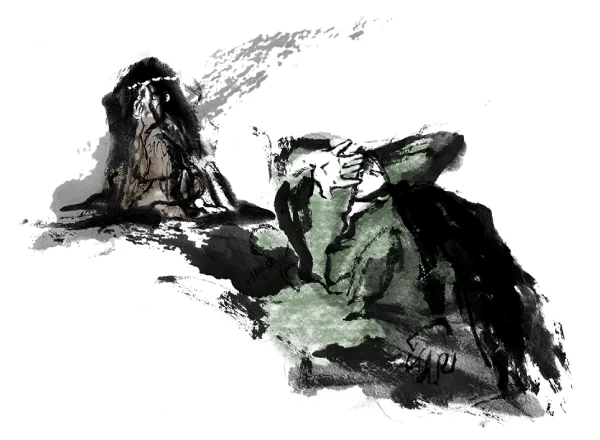
Upon learning that the pursuit had failed, Izanami-no-Mikoto set out to pursue her husband herself.
Izanagi-no-Mikoto blocked the entrance to Yomi no Kuni with a massive boulder and, with the boulder between them, told his wife that he would dissolve their union once and for all.
Then Izanami-no-Mikoto declared to him, “My dearest, if you treat me so poorly, I will kill one thousand people from your land each day.”
Izanagi-no-Mikoto replied, “My beloved wife, if you commit such cruelty, I will build one thousand five hundred birthing huts each day to produce children.”
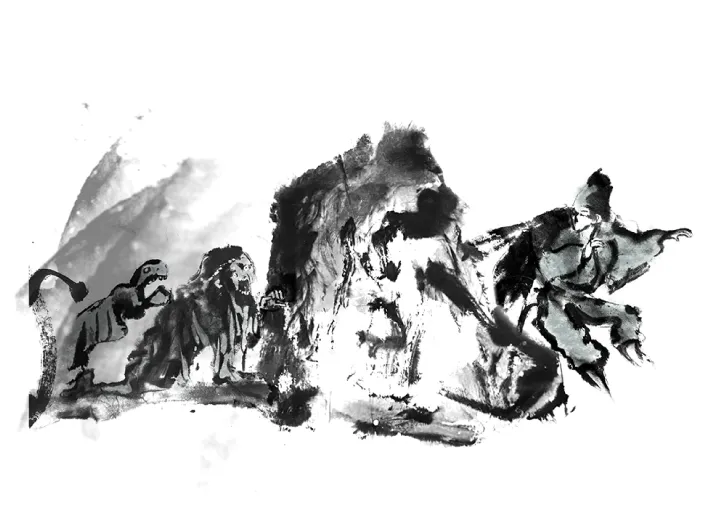
And so, the two deities bid each other an eternal farewell.
Kakuri no Miya
(Hidden Palace)
Izanagi-no-Mikoto, who returned from Yomi no Kuni, washed his body in the river and performed misogi*2 in the sea to purify himself.
As he washed himself, three deities came into being: the sun goddess Amaterasu Omikami when he washed his left eye, the moon god Tsukuyomi-no-Mikoto when he washed his right eye, and Susanoo-no-Mikoto when he washed his nose.
Izanagi-no-Mikoto handed over jewels to Amaterasu Omikami and ordered her to rule Takamanohara.
After that, according to legend, Izanagi-no-Mikoto returned to Taga on Awaji Island, which he first created, and established Kakuri no Miya (Hidden Palace), where he spent the remainder of his life. The current Izanagi-jingu Shinto Shrine is located at the very site where Kakuri no Miya once stood.
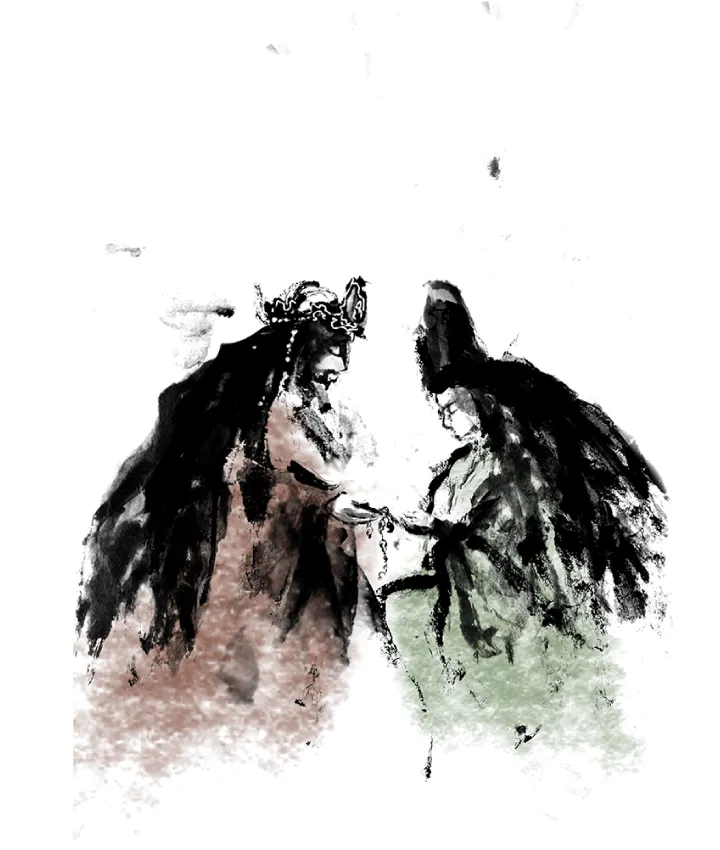
*2 Misogi: Water is believed to have a purifying effect, and misogi is the Shinto ritual of washing and purifying the body in a river or sea.

The Legend of Japan's Creation
Endures Even Today
The peach deity who saved Izanagi-no-Mikoto
Izanagi-no-Mikoto tried to escape from Izanami-no-Mikoto, who had transformed into a horrifying figure in Yomi no Kuni.
Upon learning this, Izanami-no-Mikoto became furious and dispatched the hags, the thunder gods, and an army of warriors from the underworld to pursue him.
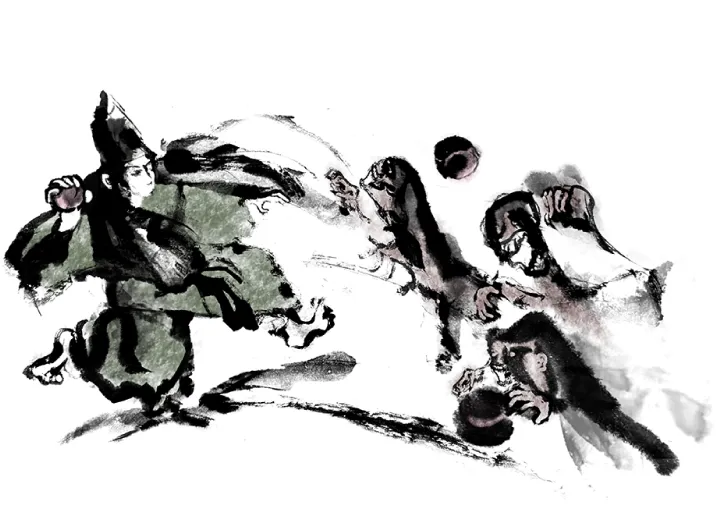
Izanagi-no-Mikoto reached the boundary between the world of the living and Yomi no Kuni and hurled three peaches that caught his eye, driving back the pursuers from Yomi no Kuni.
Izanagi no Mikoto named the peaches “Okamuzumi no Mikoto” and commanded them to continue helping people, thereby deifying them.
Izanagi-jingu Shinto Shrine offers amulets to ward off evils, derived from this legend, such as peach-shaped clay bells, peach fruit amulets, and peach-shaped ema (votive tablets).
Hiruko's subsequent life...
Leading to Awaji Ningyo Joruri
(Awaji Puppet Narrative)
Before the two deities Izanagi-no-Mikoto and Izanami-no-Mikoto created Awaji Island, they had their first child, Hiruko.
However, Hiruko was carried away in a reed boat.
After a long drift, Hiruko met Hyakudayu, a fisherman, and ordered him to build a palace in the land of Nishinomiya.
Hyakudayu built Nishinomiya Daimyojin Shrine, and a man named Dokunbo served Hiruko. However, after Dokunbo passed away, no one remained to serve him. The weather turned harsh, and misfortunes started to befall people.
Hyakudayu consulted public officials, who instructed him to create a doll resembling Dokunbo to serve the deity. He crafted a doll that looked just like Dokunbo and asked Hiruko to make it dance.
As a result, the desolate land grew calm, the winds and waves settled, and bountiful catches continued.
Hyakudayu traveled throughout Japan, operating the puppet.
Later, he settled in the village of Sanjo on Awaji Island, where he began teaching the art of puppet manipulation.
This is considered the origin of Awaji Ningyo Joruri.
From the Awaji Puppet Theater website.