Cultural Properties
- Home
- Cultural Properties
- Eshima Island
29Eshima Island
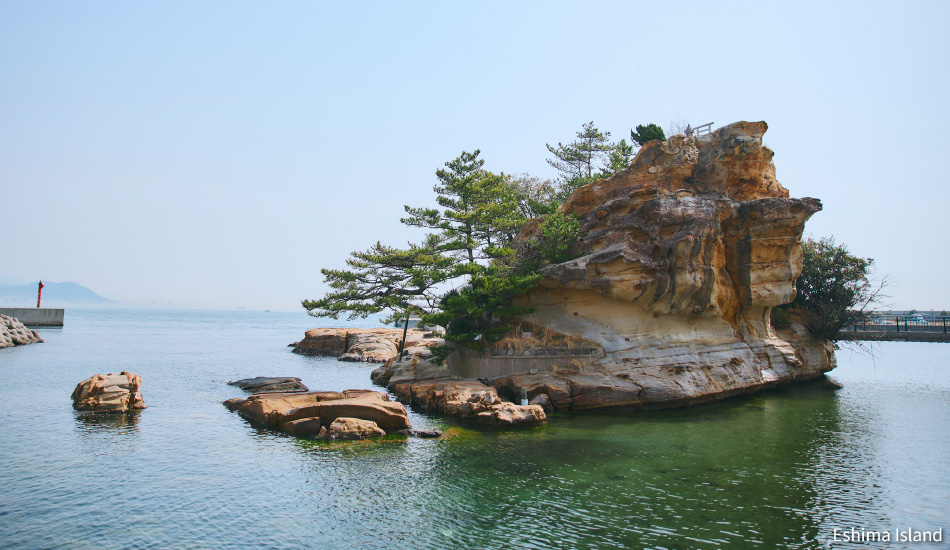
Eshima Island breaks the water’s surface at the northern tip of Awaji Island and boasts beautiful natural scenery. It is considered one of the legendary sites of Onokoro Island in the Kuniumi Story.
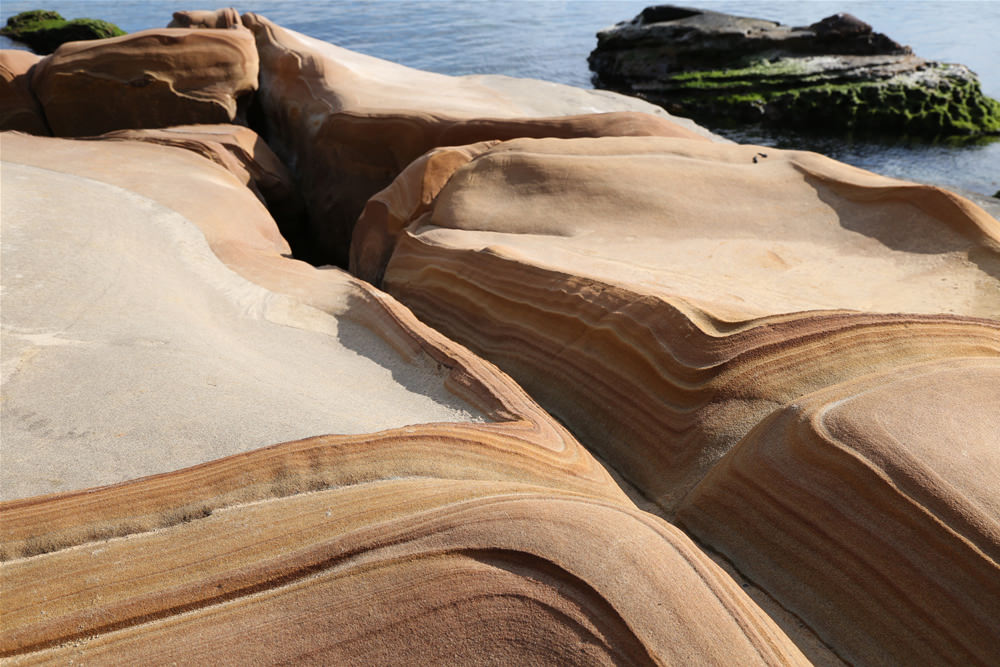
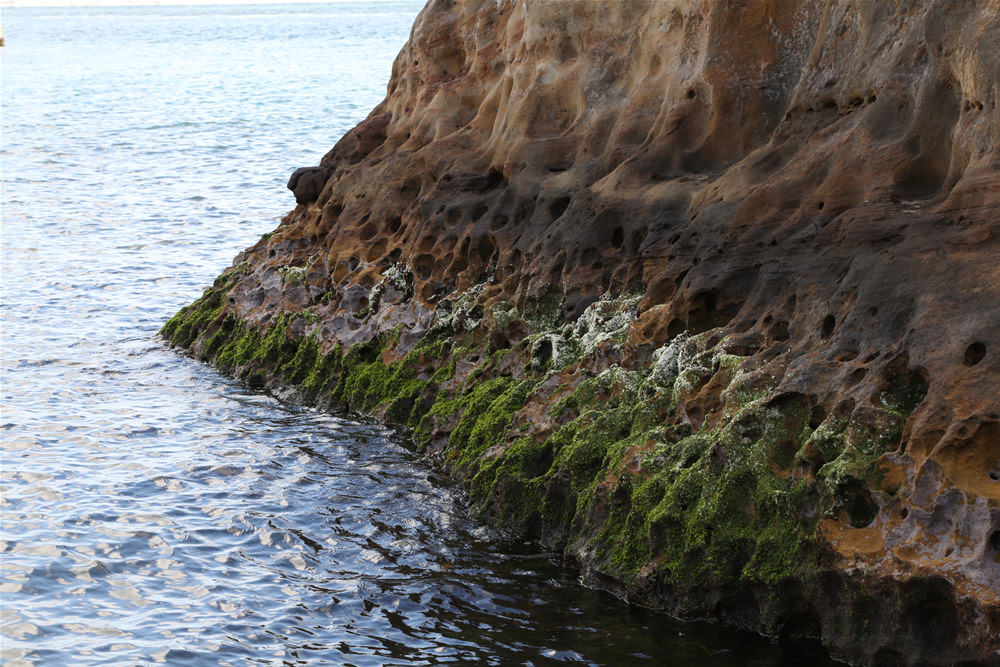
The island consists of sandstone beds formed approximately 38 to 35 million years ago and have been shaped by years of wind and wave erosion. Iron within the earth oxidized along cracks and bedding planes, depositing limonite in shades from brown to yellow and creating beautiful bands. Round, reddish-brown stones can also be seen across the rock face.
These stones are called “nodules”; they form when silicic acid and carbonate condense and settle around fossils and sand grains. Locally, they are also known as “Naki-ishi.”
The stunning beauty of Eshima Island has inspired many poets, whose numerous waka poems survive to this day.
The Heike Monogatari (The Tale of the Heike) recounts that people living in the new capital of Fukuhara—either wishing to view the moon at famous scenic spots or recalling the past exploits of the Minamoto clan’s generals—traveled from Suma along the coast of Akashi, crossed the Awaji Strait, and admired the moon from the shores of Eshima Island. This passage suggests that Eshima was renowned as a moon-viewing site.
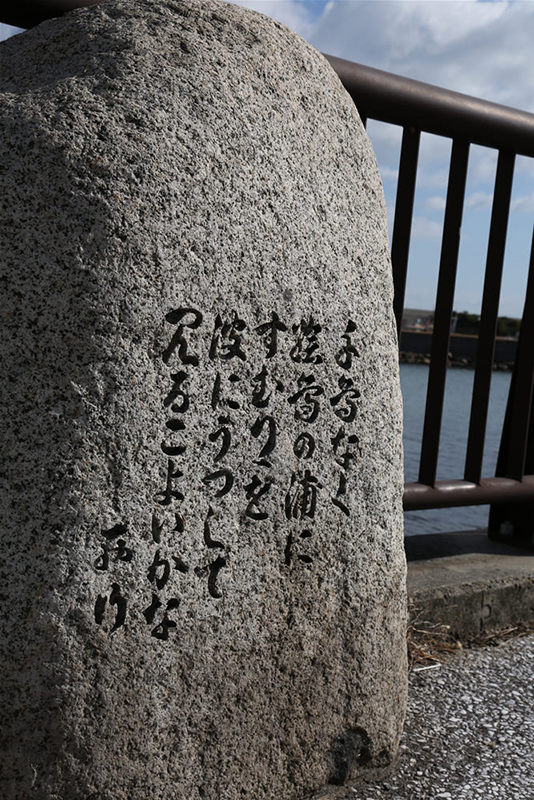
The monk Saigyo, a poet active from the end of the Heian period to the Kamakura period (the late 12th-13th centuries), composed a poem: “Tonight, amid the plovers’ cries, I gaze upon the moon at Eshima’s shore, reflected upon the waves.” The poem is inscribed on the monument at the entrance to the bridge that leads to Eshima Island.
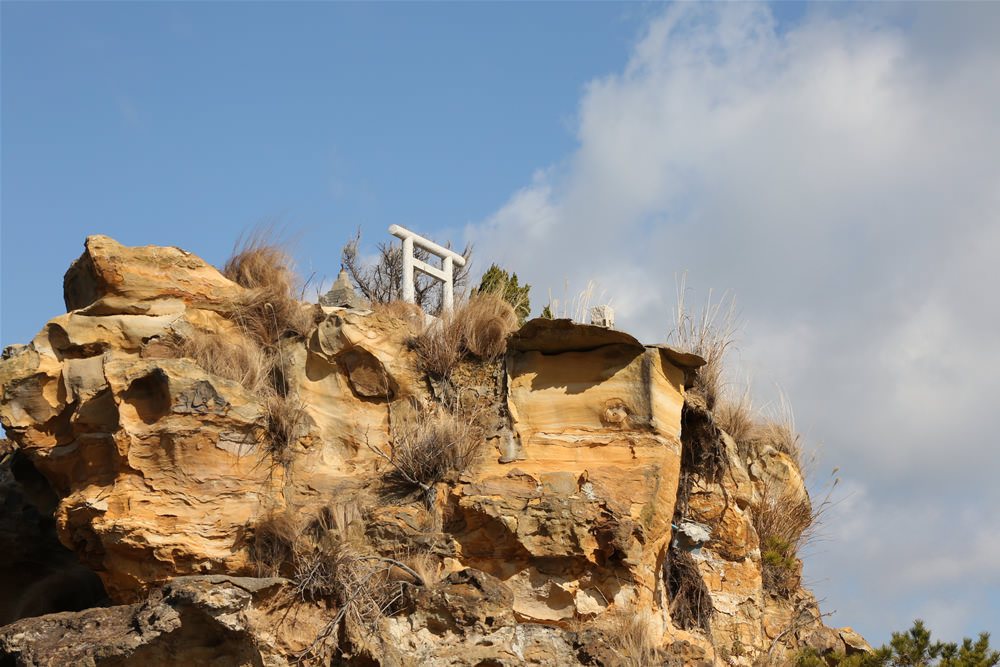
Hokyoin Memorial Pagoda for Matsuomaru’s soul
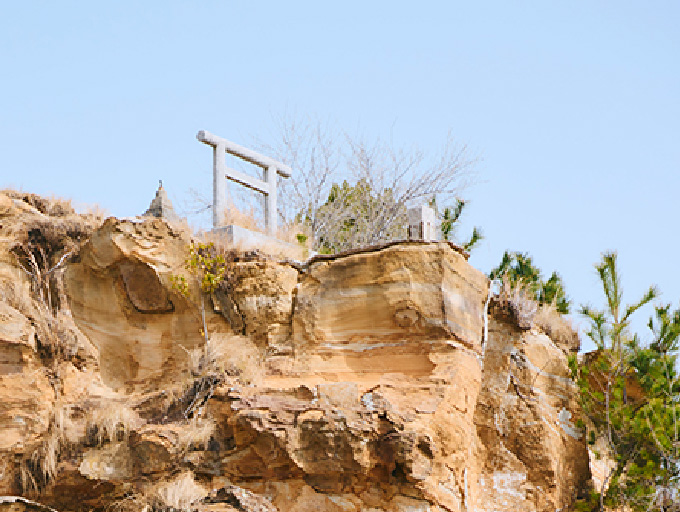
A stone pagoda stands at the top of Eshima Island. Legend has it that this pagoda, known as “Hokyoin Pagoda,” is a memorial pagoda for Matsuomaru, a page who served Taira no Kiyomori.
According to legend, when Taira no Kiyomori was building Owada no Tomari (a port in the area of present-day Hyogo Ward, Kobe City), construction proved extremely difficult. Divination declared that a human sacrifice was required, and he tried to gather many people as potential victims. However, a young boy named Matsuomaru, who served Kiyomori, protested that such an act was unbearable; he offered himself as the sacrifice and threw himself into the sea.
Afterward, the port was completed safely. The pagoda is believed to have been built to pray for the repose of Matsuomaru’s soul.

Iwakusu Jinja Shinto Shrine
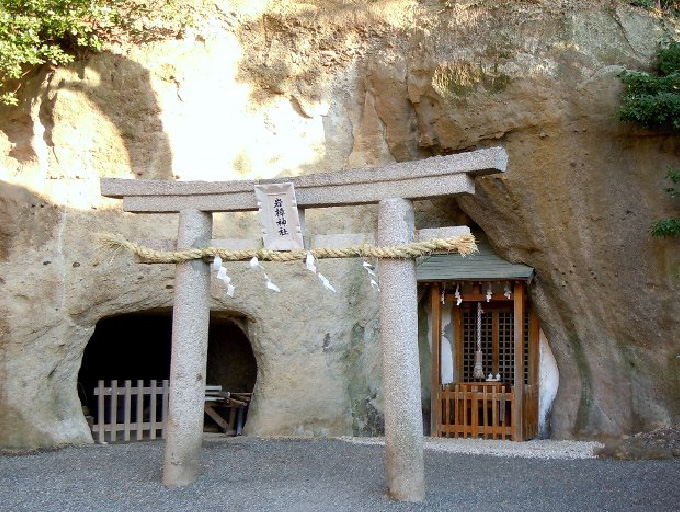
After crossing the national highway from Eshima Island, you will see a 130-meter-high mountain ahead, where Iwaya Castle was built. Heading west leads to Iwakusu Jinja Shinto Shrine, dedicated to the deities Izanagi-no-Mikoto, Izanami-no-Mikoto, and Hiruko, located in a cave beneath the cliff at the northern end of Shiroyama.
Address: Iwaya, Awaji City (within Ebisu Shinto Shrine)
⇒ Google map
Phone: +81-799-72-3420 (Iwaya Tourist Information Center)
| Designation | Prefectural Place of Scenic Beauty |
|---|---|
| Address | 884-4 Iwaya, Awaji City, Hyogo Prefecture 656-2401 |
| Phone | +81-799-64-2520 |
| Inquiries | Social Education Division, Awaji Municipal Board of Education |
