Cultural Properties
- Home
- Cultural Properties
- Senzan Senkoji Temple
23Senzan Senkoji Temple
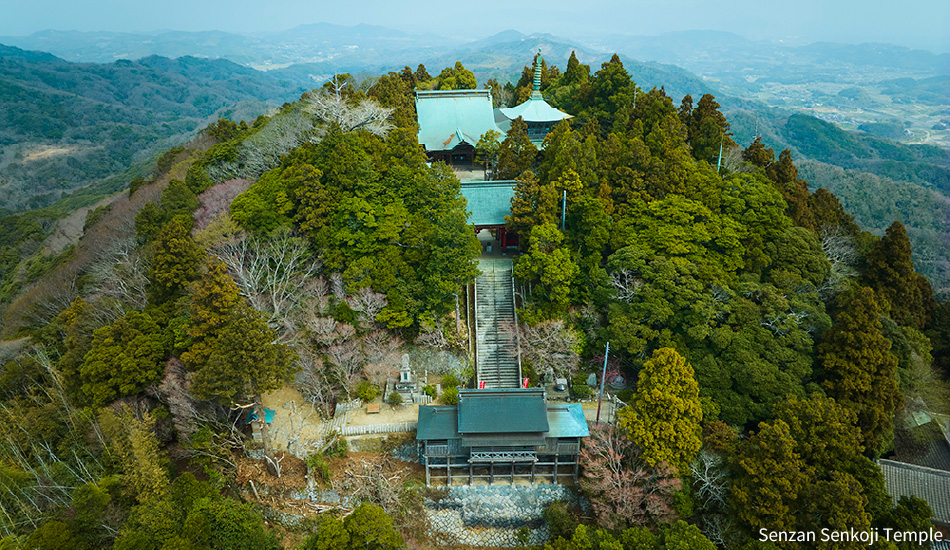
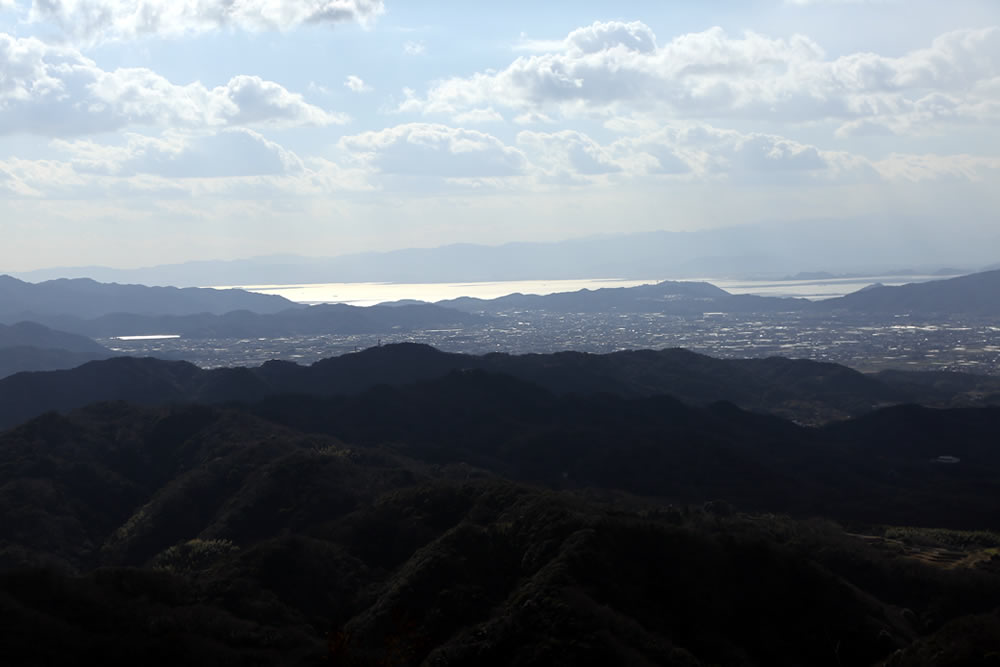
Standing 448 meters above sea level, Mt. Senzan is affectionately known locally as “Awaji Fuji.”
The name “Senzan,” meaning “the first mountain,” derives from the Kuniumi Story (Japan’s Creation Myth), which describes it as the first mountain created by the deities Izanagi-no-Mikoto and Izanami-no-Mikoto during the formation of the land.
Senkoji Temple, perched at the summit, has long been revered as a sacred site and continues to draw many visitors.
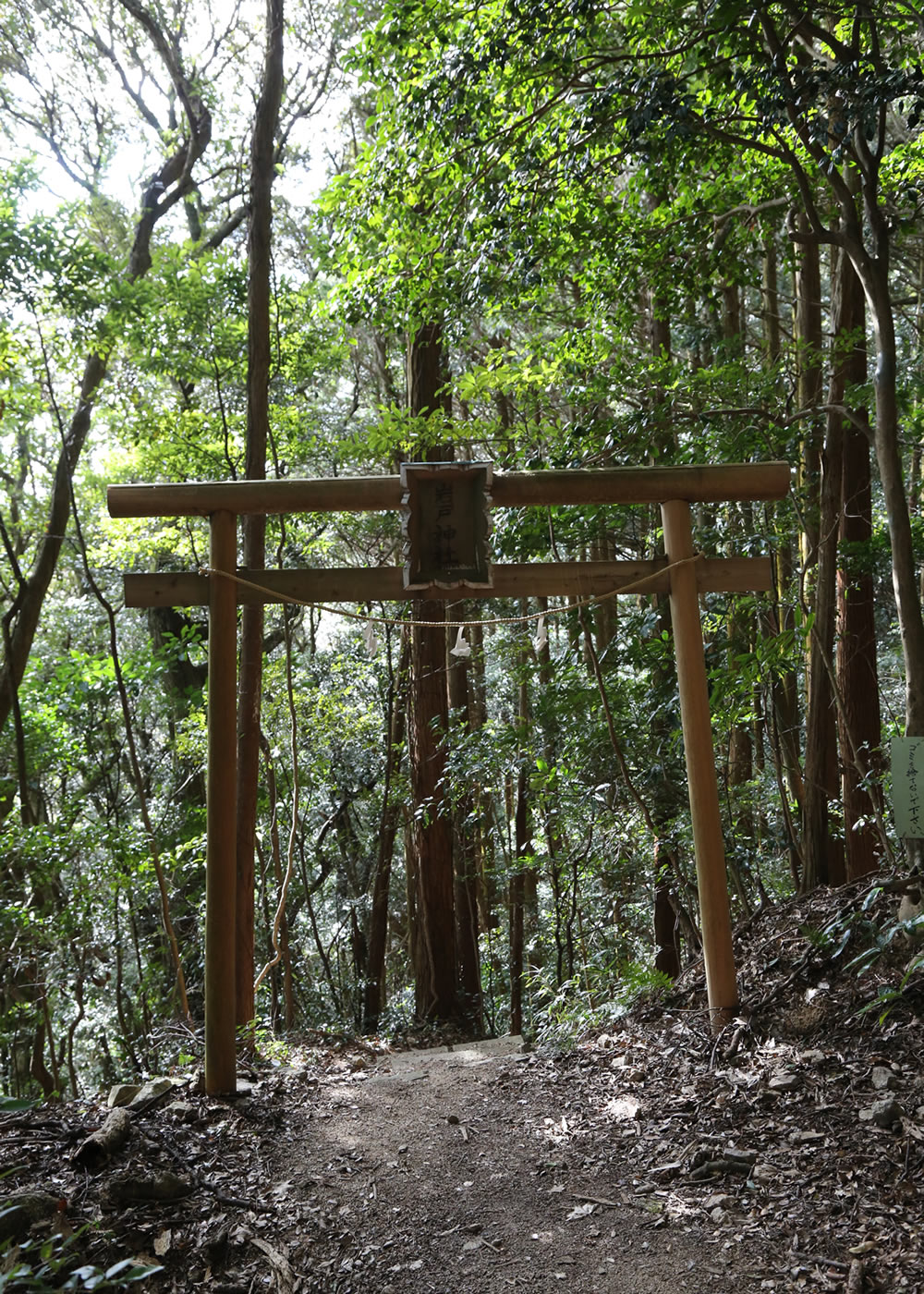
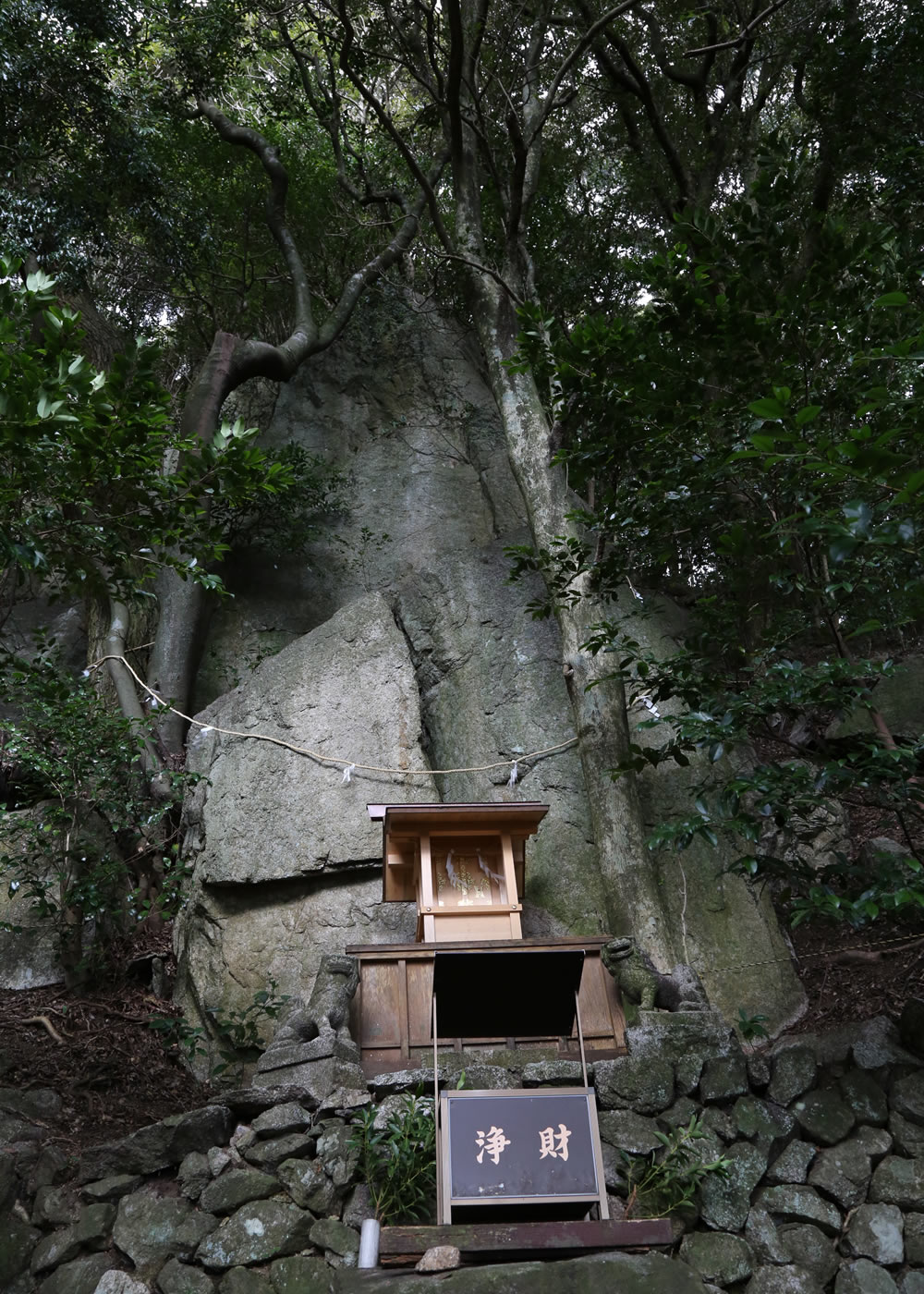
Just below it stands Iwato Jinja Shinto Shrine, which enshrines the Sun Goddess Amaterasu Omikami, who hid in the cave known as Amano no Iwato (Heavenly Rock Cave). This place deep in the forest is closely connected to the Kuniumi Story.
History of Senkoji Temple
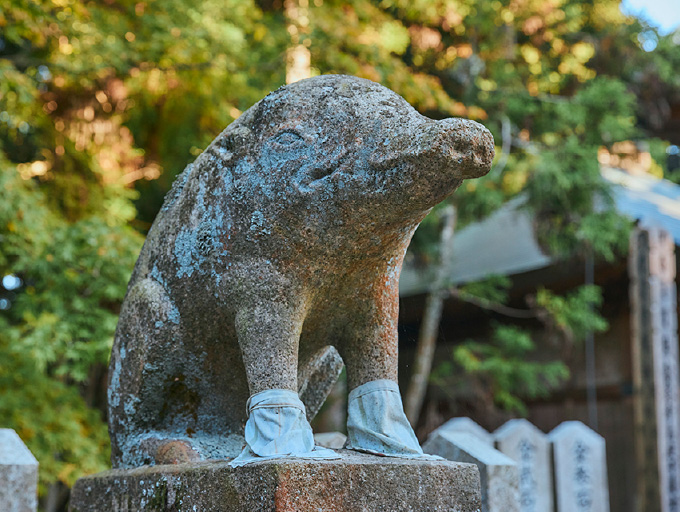
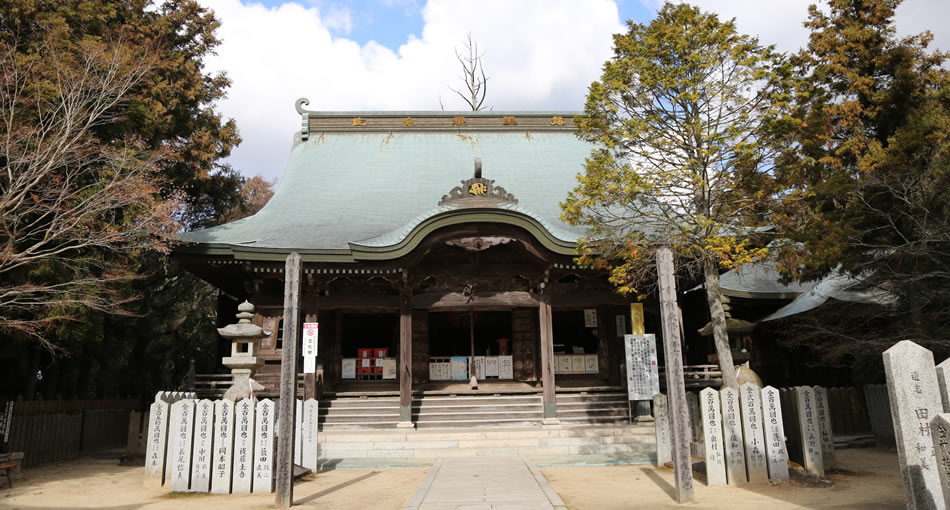
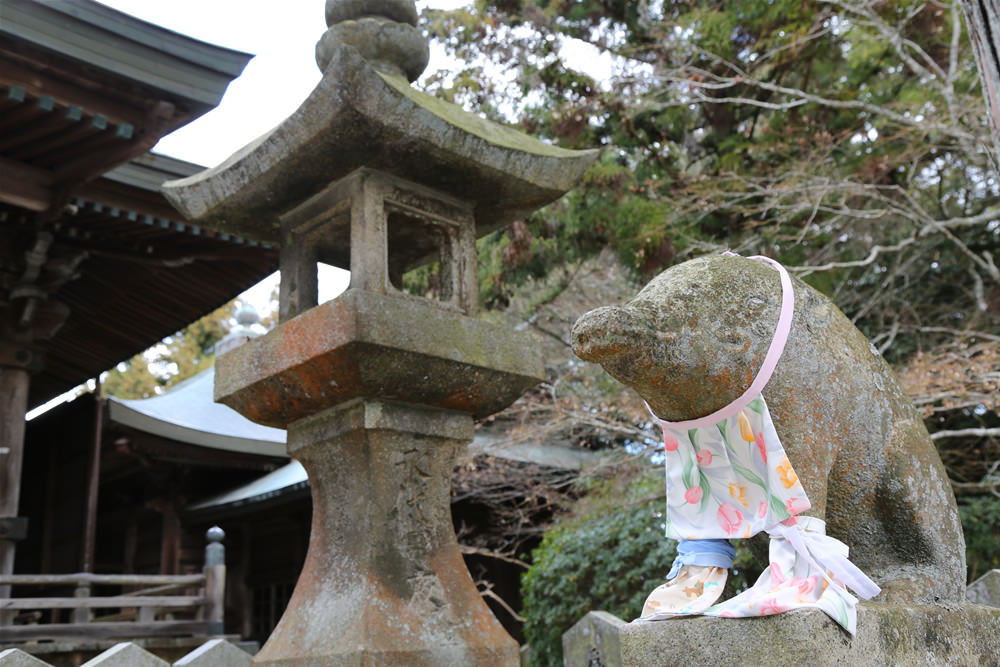
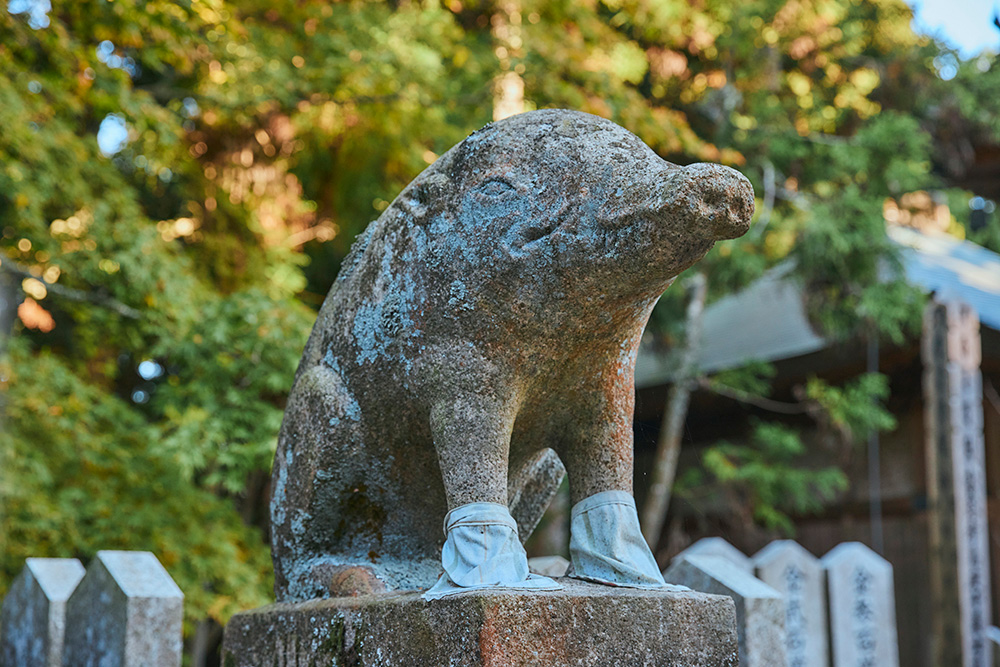
The history of Senkoji Temple begins in 901 with a story about a boar named Izasao and a hunter named Chuta, who lived in Banshu Ueno (present-day Shiso City, Hyogo Prefecture). When Chuta shot Izasao in the mountains, the boar jumped into the sea. It landed in the northern part of Awaji Island and fled to Mt. Senzan. As Chuta followed the trail of blood, he found a radiant statue of Senju Kannon (the thousand-armed Bodhisattva of Compassion) in the hollow of a giant cedar tree. It is said that an arrow pierced the chest of the Kannon statue. Chuta, awakened to the Buddhist faith, entered the priesthood. He took the name Jakunin, enshrined the statue, and founded Senkoji Temple. Reflecting this story, a pair of Koma-Inoshishi (guardian wild boar statues) are placed in front of the main hall of Senkoji Temple instead of the traditional Komainu (guardian dog statues).
Senkoji Temple temporarily declined during the Muromachi period (1336-1573) but was restored during the Sengoku (Warring States) period (the latter half of that era).
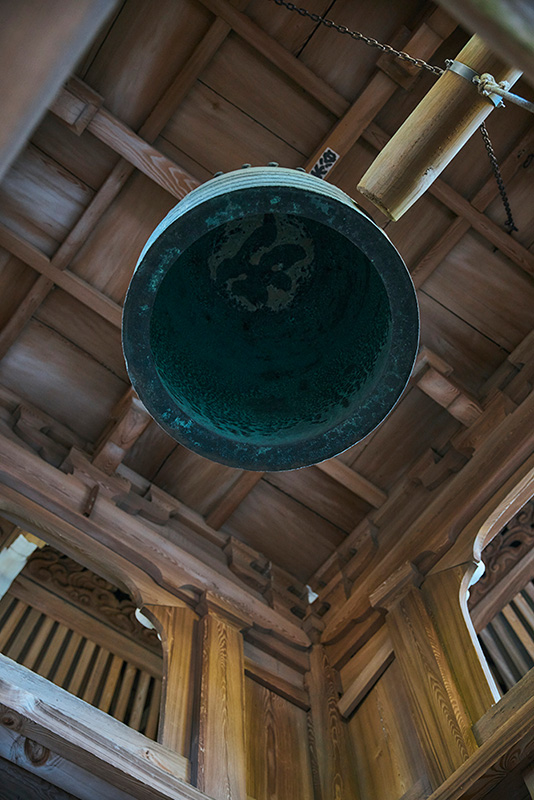
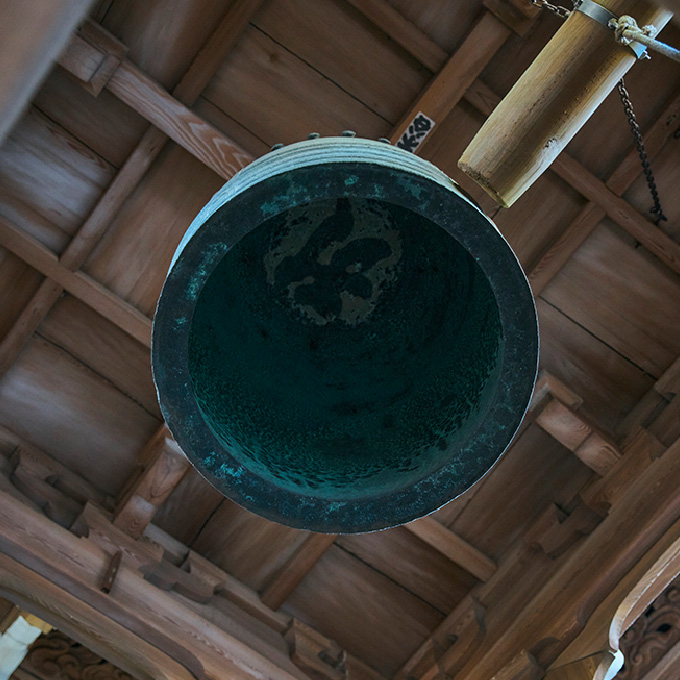
The belfry houses the temple bell, inscribed with the year 1283 (Kamakura period). The bell also bears an additional inscription stating that it was sold when Awaji Province fell into disorder in 1519, but was later repurchased and donated by Atagi Hideoki, the lord of Takenokuchi Castle, located on the north side of present-day Sumoto City. In 1519, the Hosokawa clan, which governed Awaji, was defeated by the Miyoshi clan of Awa. The temple bell is a valuable cultural property, indicating that the turmoil of the Warring States period reached even Senkoji Temple. (Designated as a National Important Cultural Property)
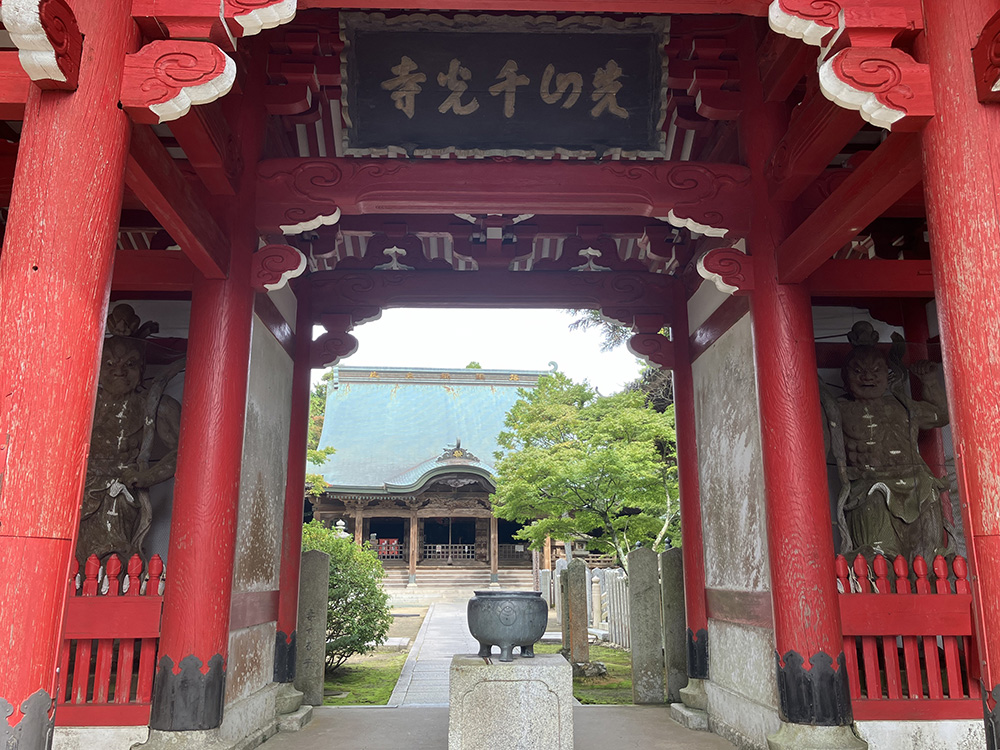
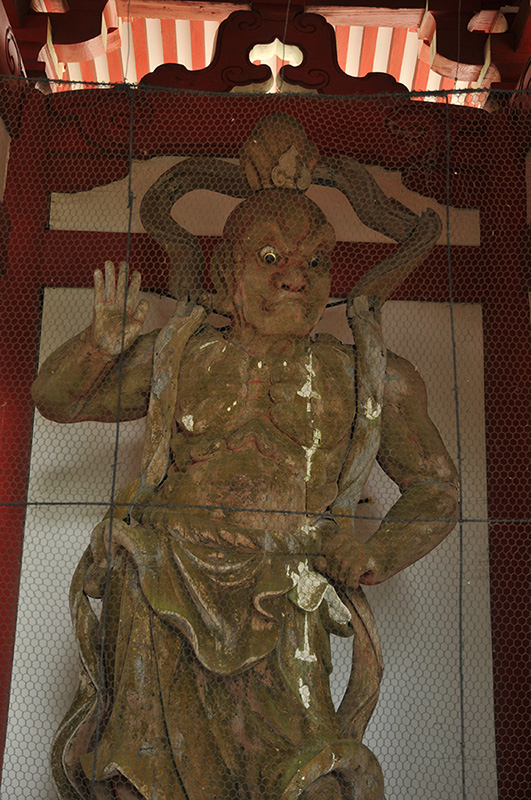
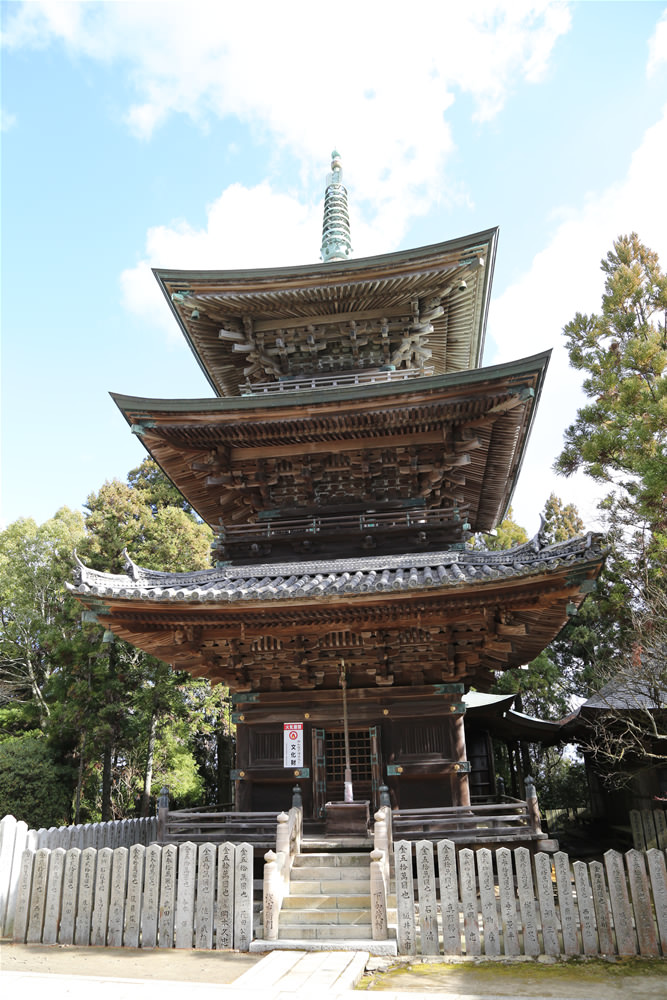
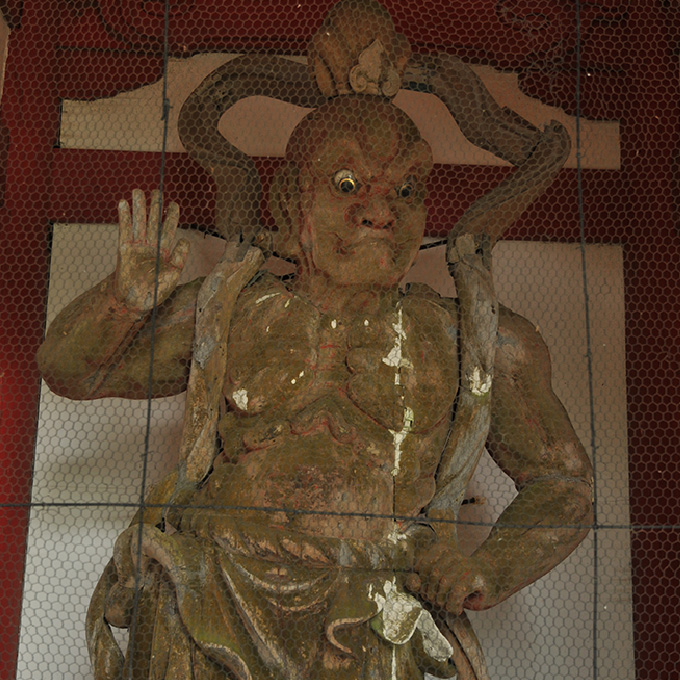
The temple is a treasury of cultural properties. Highlights include a pair of Nio guardian statues attributed to Unkei, located at the Niomon Gate; the main hall, reconstructed by Hachisuka Iemasa, Lord of Tokushima Domain; and the three-story pagoda, rebuilt thanks to the efforts of Takataya Kahei, an Awaji-born wealthy merchant who helped develop Hokkaido and build ties between Japan and Russia during the late Edo period (1603-1868).

Dango Korogashi (Rolling Rice Balls)
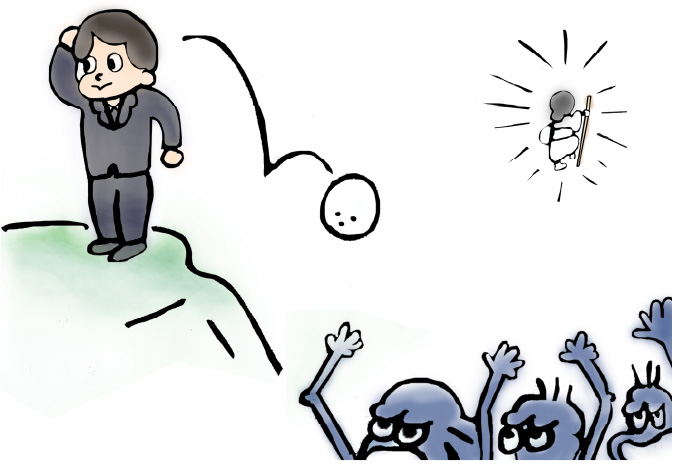
On the 35th day after a person’s death, people on Awaji Island visit Senkoji Temple for a memorial service. Visitors walk toward the cliff at Senkoji Temple, turn their backs to it, and toss the home-prepared “dango” (a ping-pong-ball-sized rice ball) over their shoulders. It is a custom unique to Awaji that is performed not only at Senkoji Temple but also at high mountains on the island.
In Buddhism, King Enma judges the souls of the deceased and decides whether they will be reincarnated in heaven or hell based on their actions in life. One legend holds that on the 35th day after death, the spirits of the departed ascend a mountain. At that time, the bereaved family throws food to distract evil spirits who may obstruct their journey.
| Designation | Undesignated (Temple bell: National Important Cultural Property) |
|---|---|
| Address | 2132 Kaminaizen, Sumoto City, Hyogo Prefecture 656-0017 |
| Phone | +81-799-22-0281 |
|
Visitors welcome (The parking lot fills up in the morning on Sat., Sun., and public holidays, so please take a taxi [15 mins. from Sumoto Bus Terminal].) |
|
| Holiday | Open 365 days a year |
| Entry | Free |
