Cultural Properties
- Home
- Cultural Properties
- Yamato Okunitama Jinja Shinto Shrine
22Yamato Okunitama Jinja Shinto Shrine
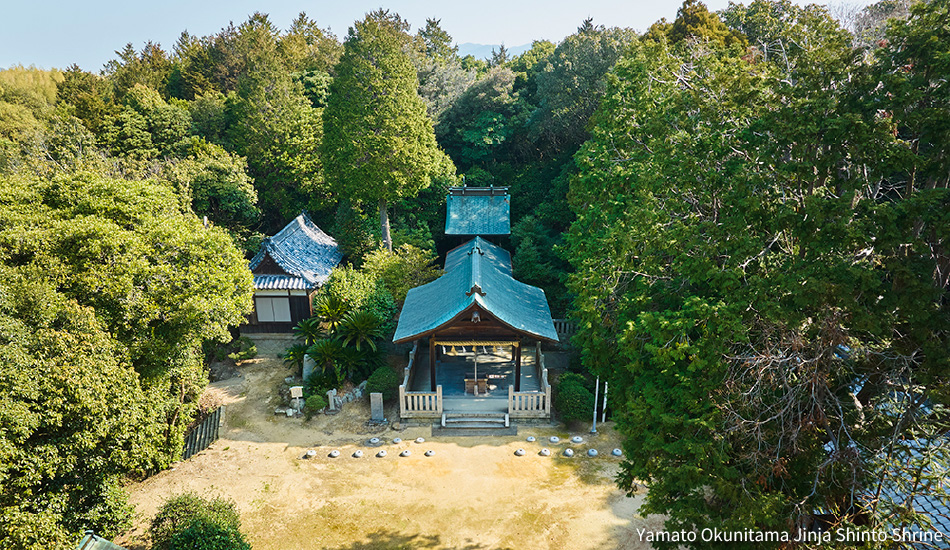
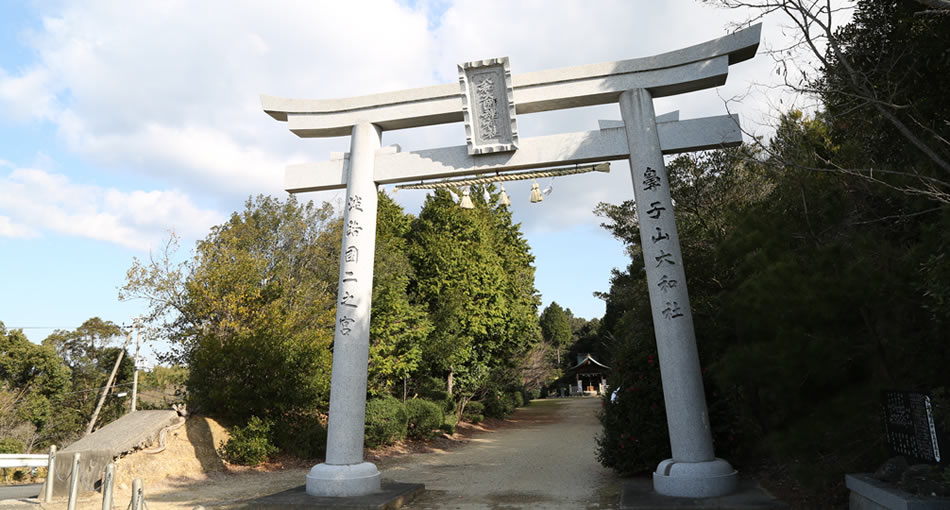
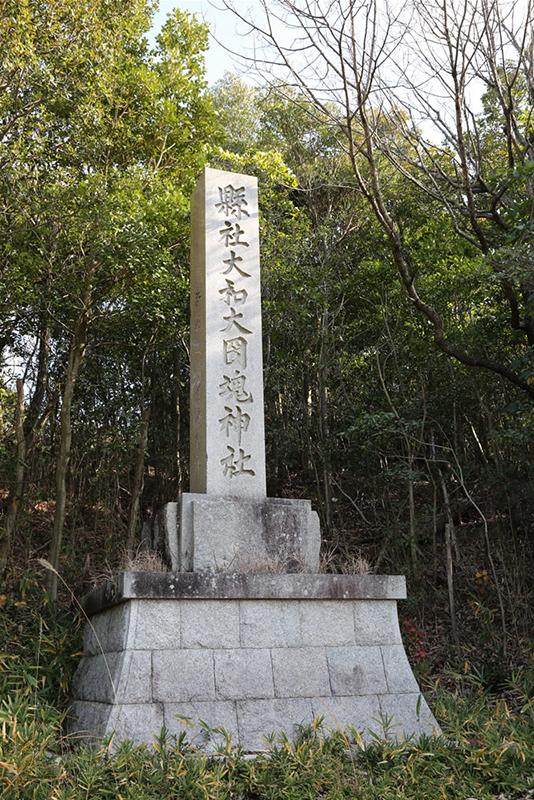
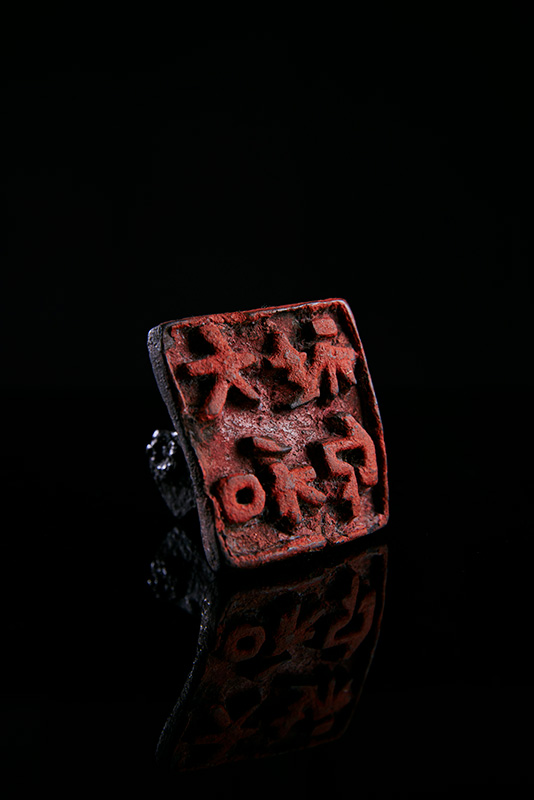
Yamato Okunitama Jinja Shinto Shrine sits on a small hill in Enamikamihada, Minamiawaji City. This area is near the former site of a “miyake,” a territory directly controlled by the Yamato Sovereignty. The shrine is also known as “Ninomiya” on Awaji Island, making it the second highest-ranking shrine after Izanagi-jingu Shrine, which holds the title of “Ichinomiya” (the highest-ranking shrine).
On Awaji Island, said to be the land of Japan’s creation, Izanagi-no-Mikoto and Izanami-no-Mikoto are revered as the island’s deities and enshrined at the Ichinomiya. Meanwhile, the Ninomiya enshrines the guardian deity of the Yamato clan, a powerful clan that flourished as Ama, and this shrine has long been held in great esteem.
The date of its founding is unknown; however, it is believed to have been enshrined separately from Yamato-ni-imasu Okunitama Shrine (present-day Yamato-jinja Shinto Shrine) in Nara Prefecture in the 5th century, when the Yamato Sovereignty deepened its ties to Awaji Island. It is thought that the Yamato clan commanded the Mihara no Ama, who were active in the region. Ichishi-no-Nagaochi, the first head priest of Yamato-ni-imasu Okunitama-jinja Shrine, was a distant ancestor of the Yamato clan and is believed to have been a member of the Ama from the Kyushu region. This connection explains the shrine’s strong relationship with the Ama.
■ The deity Yamato Okunitama no Kami as described in the Nihon Shoki
According to the Nihon Shoki (The Chronicles of Japan), the deity appears in the 6th year of Emperor Sujin’s reign. Two deities, Amaterasu Omikami and Yamato Okunitama-no-Kami were enshrined in the emperor’s palace. During the reign of Emperor Sujin, plagues spread throughout Japan, causing chaos across the land. People believed the calamities were caused by the two deities and feared them. Apprehensive of their divine power, Emperor Sujin decided to enshrine them outside the palace.
Accordingly, Amaterasu Omikami was entrusted to Princess Toyosukiiribime-no-Mikoto for worship, and Yamato Okunitama-no-Kami was entrusted to Princess Nunakiiribime-no-Mikoto.
However, Princess Nunakiiribime-no-Mikoto lost her hair and became emaciated, rendering her unfit for divine rituals.
On August 7, in the seventh year of Emperor Sujin’s reign, three individuals—Princess Yamato Tohaya Kanasajihara Makuwashi-hime, Ominakuchi-no-Sukune, and Ise-no-Omi-no-Kimi—shared the same dream. They reported to the Emperor that they had received a divine message: “If Ichishi-no-Nagaochi is appointed as the head priest to worship the deity Yamato no-Okunitama-no-Kami, then the whole land will surely achieve stability.” Thus, with Ichishi-no-Nagaochi serving as the head priest, the plague finally subsided, the five grains grew abundantly, and peace returned to the land.
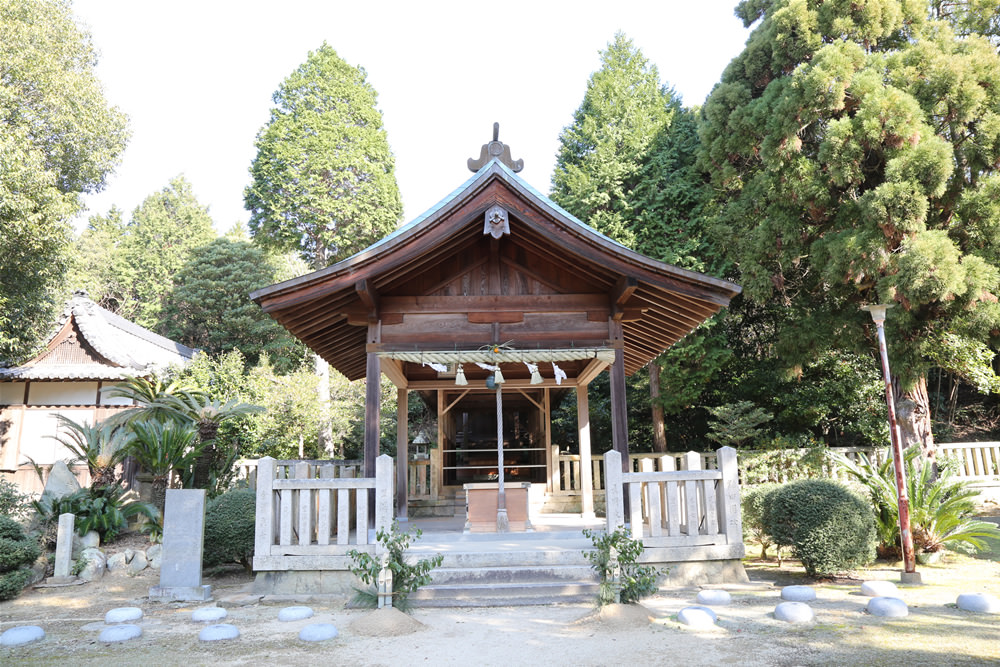
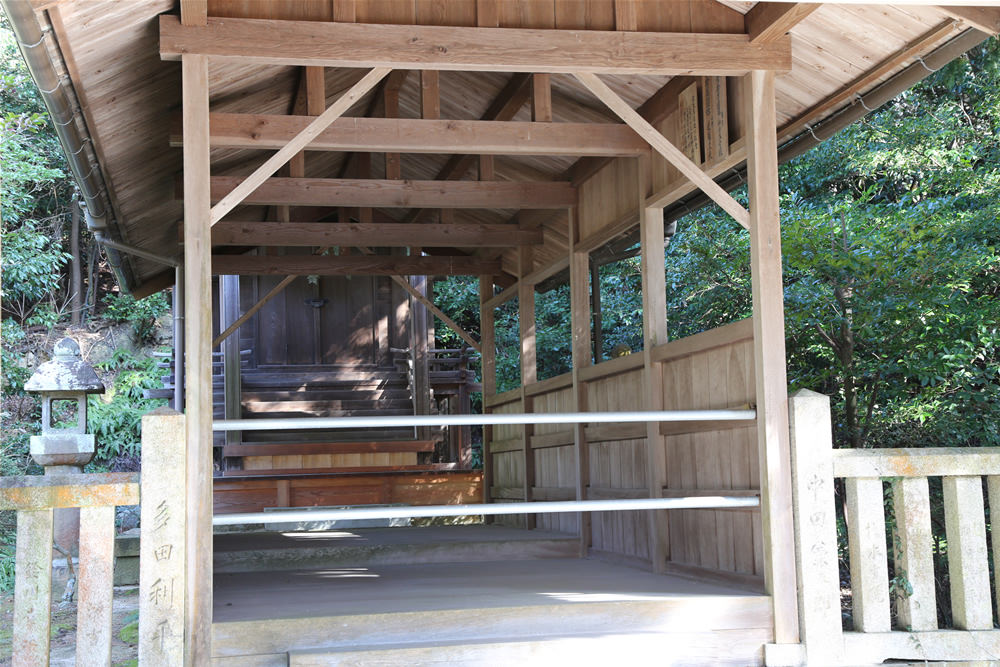
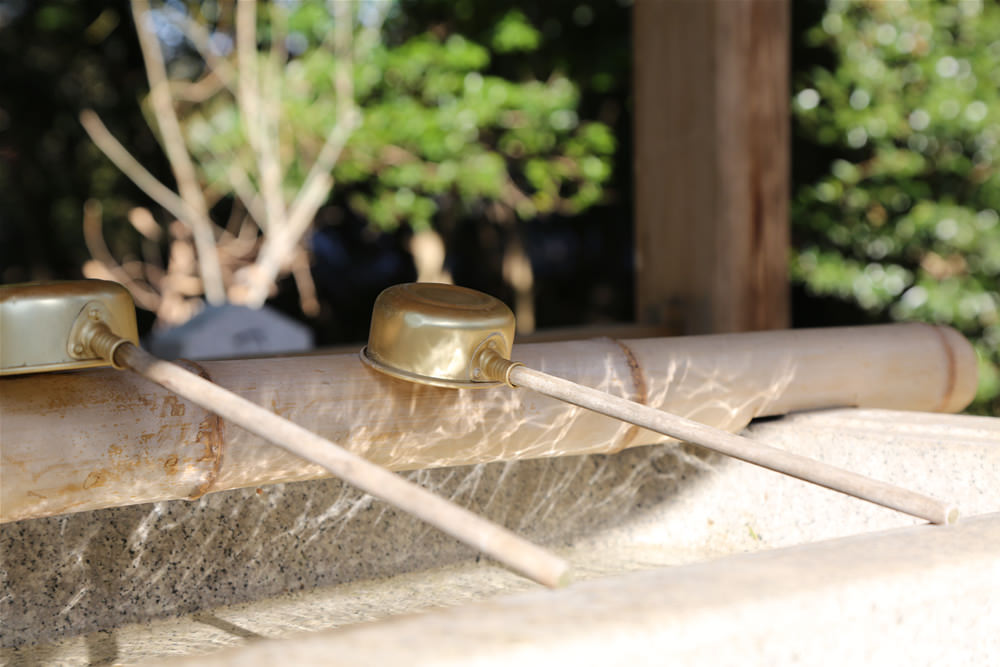
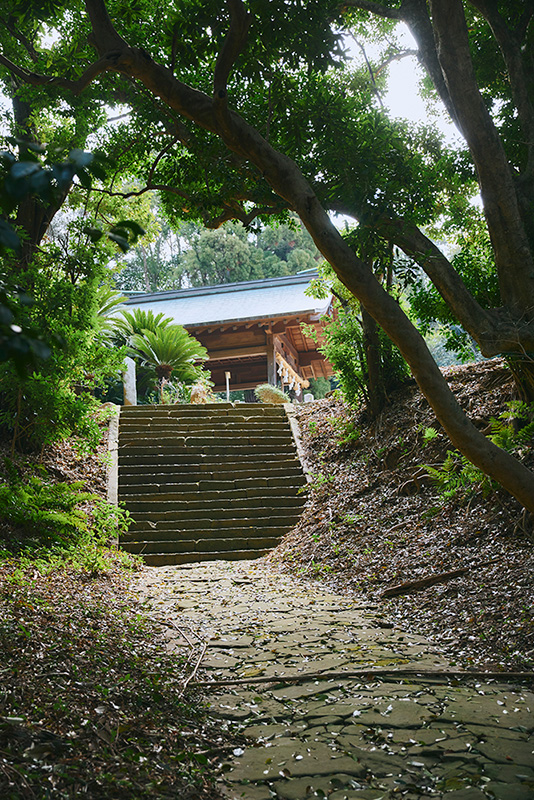
History of Yamato Okunitama Jinja Shinto Shrine
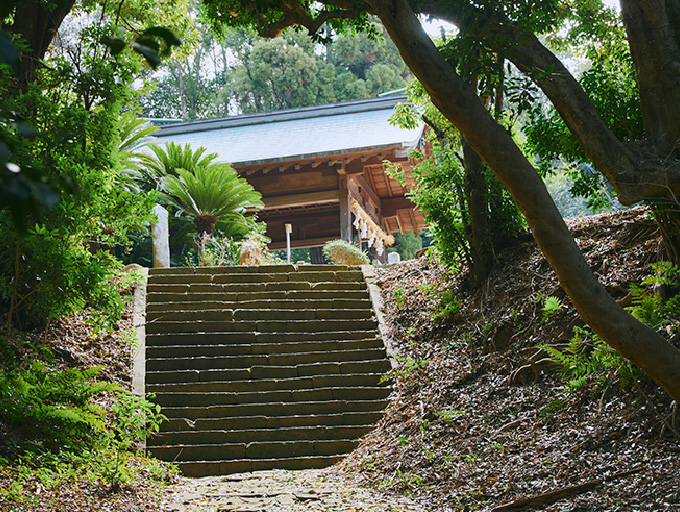
The orientation of the shrine hall was changed
The present shrine hall faces southwest, but according to legend, it originally faced west toward the Harimanada Sea.
In ancient times, the Mihara no Irie creek extended deep into the area that is now the plain. It is said that the boatmen who navigated the waters failed to worship there, thus angering the enshrined deity and bringing divine punishment. To prevent this, the shrine hall was turned to face south.
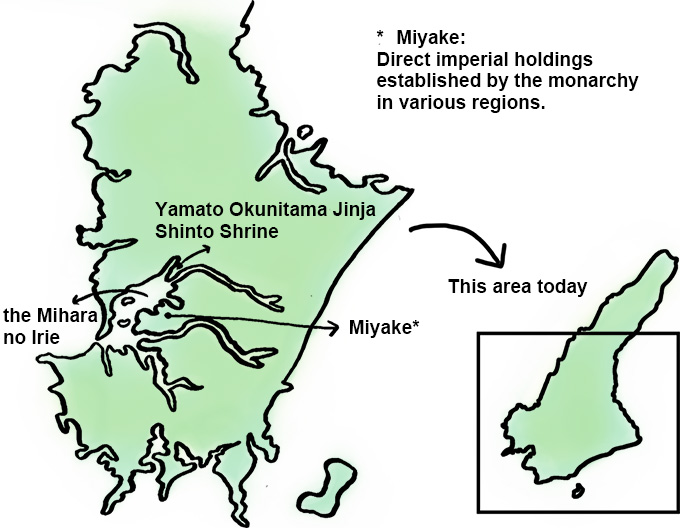
Visited by historical figures
In 1289, Ippen Shonin, founder of the Jishu sect of Buddhism, visited the shrine. According to legend, he built a hut in front of the shrine and performed Odori Nenbutsu (chanting prayers while dancing), a scene depicted in the National Treasure picture scroll “Ippen Hijirie.” He composed a waka poem, “Attuned to the Sacred Name, my mind turns West, like an empty cicada shell left behind. How cool, how pure, this voice in prayer is,” which he inscribed on a wooden plaque and then nailed it to the front of the shrine hall.
Prefectural Tangible Cultural Property: Yamato Jinja Shinto Shrine seal
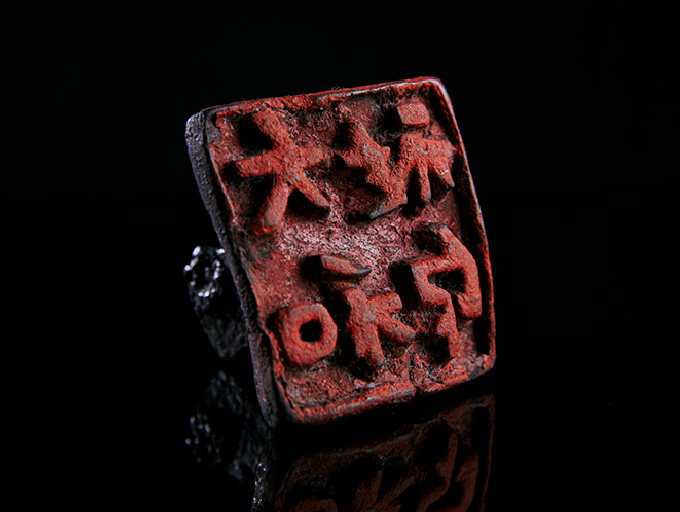
The ancient seal belonging to Yamato Okunitama Shinto Shrine was excavated from the shrine’s grounds and has been preserved there since ancient times. According to shrine legend, this seal was kept at Enjuin Temple, which served as the shrine’s bettoji* in the latter part of the Edo period (1603-1868). However, its location was lost when a fire destroyed the temple. The seal was later excavated from the remains of Enjuin when renovating the shrine grounds. It is a precious relic, preserving its ancient form and dating back to at least the latter part of the Heian period (794-1185).
Note) Bettoji: a Buddhist temple built within a shrine precinct, where the head priest lived, managed the shrine, and performed sutra chanting, religious services, incantations, and prayers.
| Designation | Undesignated (The Yamato Jinja Shinto Shrine seal is designated as a Prefectural Tangible Cultural Property) |
|---|---|
| Address | 857 Enamikamihada, Minamiawaji City, Hyogo Prefecture 656-0422 |
| Phone | +81-799-36-3984 |
| Inquiries | Yamato Okunitama Jinja Shinto Shrine |
